
DVD & Blu-ray Reviews
Father Mother Sister Brother Blu-ray
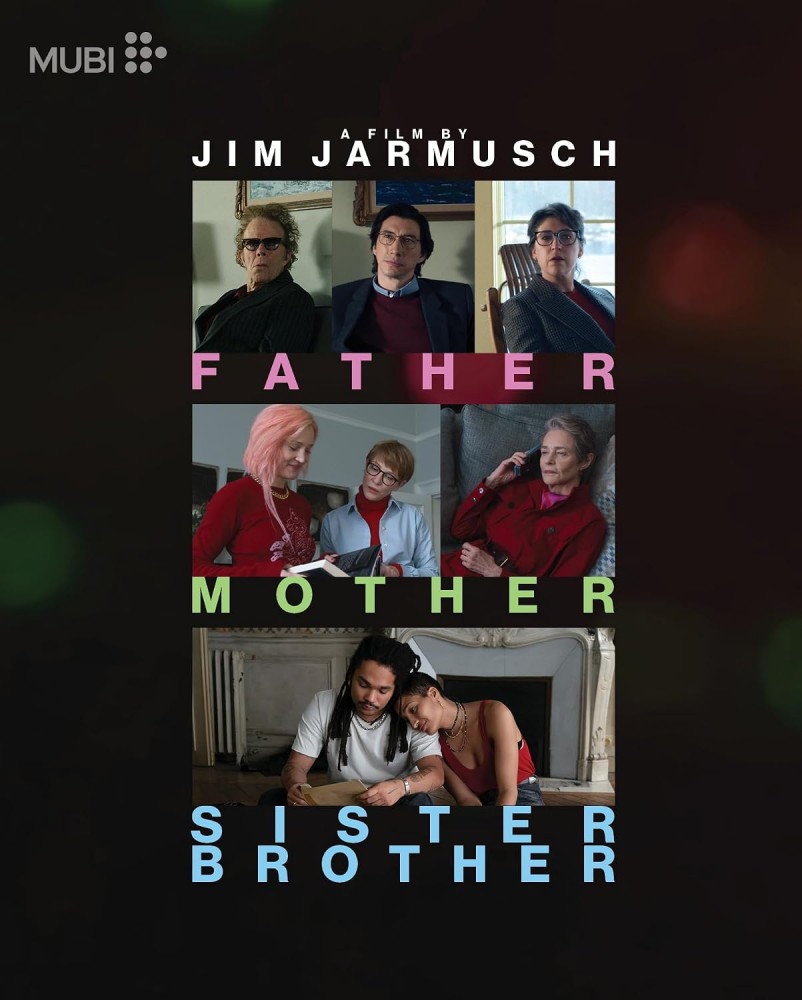
Arguably the greatest thrill of Jim Jarmusch's latest film is seeing how much character detail and how many parallels the filmmaker can squeeze into these vignettes.
Father Mother Sister Brother Blu-ray (2025)
The name “Jim Jarmusch” may be the absolute quickest way to determine whether you just like movies or whether you live and breathe cinema. Having written and directed fourteen narrative features dating back to 1980, Jarmusch is about as acclaimed and respected as any independent American filmmaker. And yet, that’s not enough to make him a household name outside of the households of bona fide cineastes. Jarmusch has inspired career retrospectives at museums and film festivals. He’s worked with big movie stars like Johnny Depp, Bill Murray, Cate Blanchett, and Selena Gomez. He even voiced himself in a 2008 episode of “The Simpsons.” But unless your social circle involves actual film critics, cinema studies professors, and aging bon vivants who haven’t abandoned independent moviegoing, you probably have to turn to the Internet to discuss Jarmusch’s body of work.
Buy Father Mother Sister Brother on Blu-ray: Amazon.com
It’s a remarkable body of work made by an offbeat storyteller who has always prioritized art over commerce, who has never once taken a for-hire gig longer than a music video, and who operates way outside of what we would consider show business. Jarmusch’s accolades have been limited to various honors at the Cannes Film Festival and a half-dozen losing nominations at the Independent Spirit Awards. He’s gotten more recognition from my online film critics group, as in a single Best Original Screenplay nomination twenty years ago, than from the Academy Awards.
There isn’t even consensus regarding his best-known and best-loved films. The quintessential Jarmusch movie may be 2004’s black and white anthology film Coffee and Cigarettes, composed of eleven shorts filmed over a period of seventeen years. But that is not among the works that have made it into the Criterion Collection for a boost in recognition from those who continue to support physical media via that prestige boutique line. Criterion has admitted a half-dozen other Jarmusch joints from the ’80s and ’90s into their esteemed ranks including Dead Man starring Depp, Ghost Dog: The Way of the Samurai starring Forest Whitaker, and the anthologies Mystery Train and Night on Earth.
Jarmusch’s fourteenth and latest feature arrived in US theaters last Christmas Eve to the director’s signature divide: anticipation from the film community and utter obliviousness from the general moviegoing public. Saddled with a hard to (correctly) remember title, Father Mother Sister Brother grossed under a million dollars domestically and an additional $7.3 M in other parts of the world. The film, which was rejected from competition by the filmmaker’s usual landing spot of Cannes, drew the favorable reviews that Jarmusch has long come to expect and presumably appreciate. But the reviews didn’t do much to sell tickets stateside, no surprise to anyone following Jarmusch’s niche career whose commercial peak occurred when the Murray-topped Broken Flowers somehow grossed $47 million worldwide in 2005-06.
While Murrary is nowhere to be found here, Jarmusch reteams with a number of prior collaborators including Blanchett, Tom Waits, and Adam Driver in this anthology consisting of three roughly 35-minute shorts. Each segment brings together family members for planned interactions. The segments do not connect to one another narratively, but very much do so narratively, with recurring bits involving water, Rolex watches, slow motion skateboarders, and unplanned color coordination.
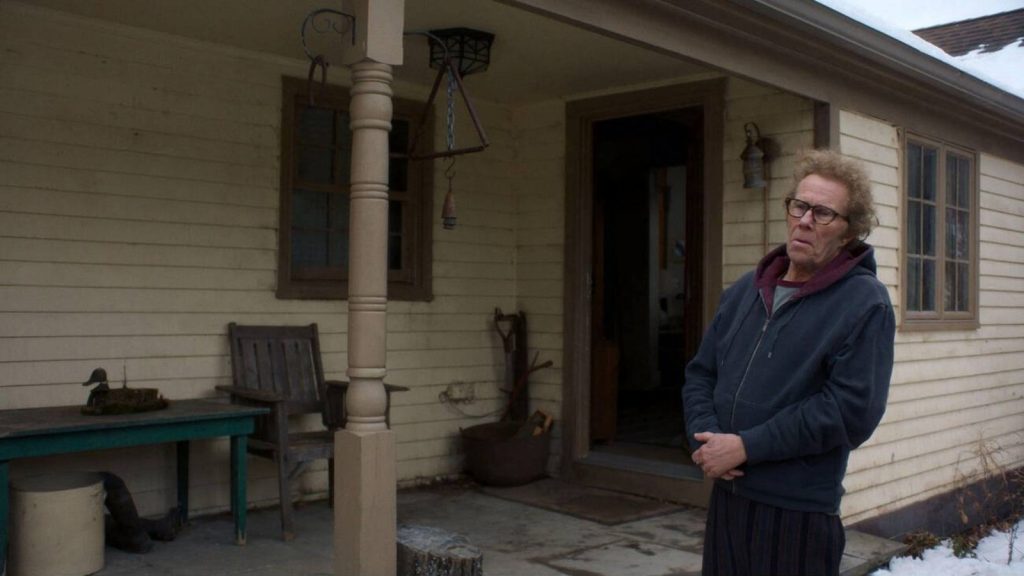
The first segment, Father, follows fortysomething American siblings Jeff (Driver) and Emily (Mayim Bialik) to see their widowed father (Waits) for the first time in two years. It is a strained gathering, as Dad sketchily sidesteps questions about the home repairs for which Jeff has given him money, while presenting himself as living modestly. There are multiple toasts, concerns about the father’s health, and a cardboard box full of nonperishable food items.
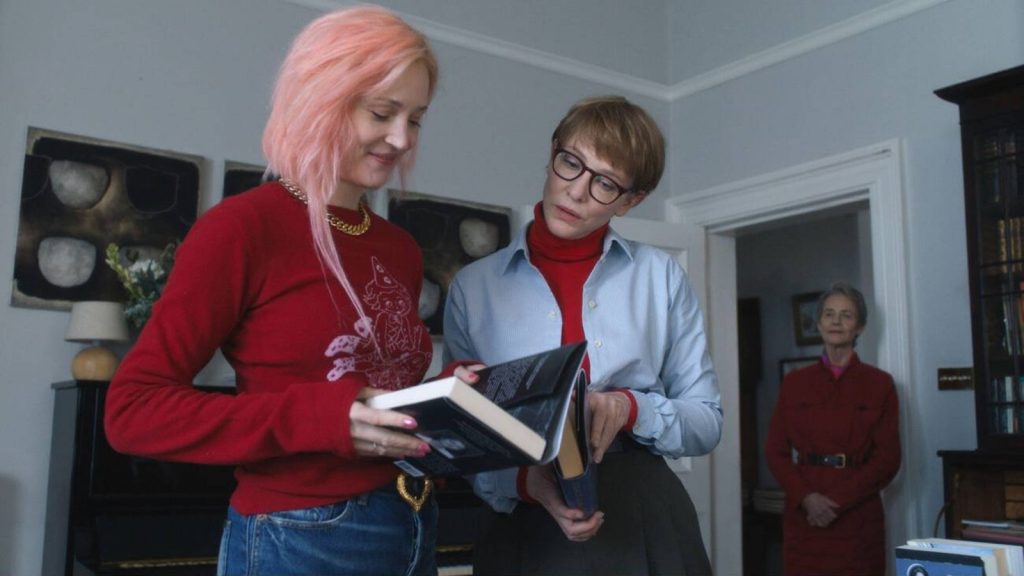
The second segment, Mother, similarly sees two siblings journeying to visit their parent. Posh, successful author (Charlotte Rampling) sits down to tea with her two grown daughters, Lilith (Phantom Thread‘s Vicky Krieps) and Timothea (Blanchett). This time, the children seem to be misrepresenting their affluence, with the pink-haired Lilith dubiously discussing her Lexus and relationship status in an apparent attempt to win Mom’s elusive approval. Tim, on the other hand, nearly needs roadside assistance, but seems to avoid putting on airs as the more responsible sibling.
Last and least is Sister Brother, in which expatriate twins Skye (Indya Moore) and Billy (Luka Sabbat) take final trip to the Parisian apartment their recently deceased parents called home.
Arguably the greatest thrill of Jarmusch’s latest film is seeing how much character detail and how many parallels the filmmaker can squeeze into these self-contained vignettes. You glean as much from what is not said as what is. In the half-truths and full deceptions of these exchanges, you see relatably flawed people struggling with their feelings, their reputations, their mortality, and their familial obligations. For a lucky few, family life is sunshine, rainbows, unconditional love, and support. For the rest of us, there is guilt and insecurity. Vulnerability and genuine emotion are minefields, to be tread carefully for fear of consequence, pain, and lost time. We know extremely little about Jarmusch’s personal life, his longtime domestic partnership with his early producer Sara Driver, and his one adult child from sperm donation. What we do know from watching his films and this one especially is that he’s a great observer and portrayer of awkward human interactions. This is a subject that has run through Jarmusch’s work: in meals shared by strangers, in bizarre cab rides, in reunions with former lovers. There is both sharp wit and rampant humanity in the three mostly engrossing extended scenes that Jarmusch serves up this time out.
Six months after becoming available to stream on North American distributor MUBI’s signature subscription service, Jarmusch’s film finally hits physical media next month in the slipcovered Blu-ray reviewed here.
BLU-RAY DISC SPECIFICATIONS:
1.85:1 Widescreen
Subtitles: English SDH, French, Spanish
DTS-HD Master Audio 5.1 (English), DTS-HD Master Audio 2.0 (English), Dolby 2.0 (Descriptive Video Service)
Release Date: August 25, 2026
Single-sided, dual-layered disc (BD-25)
Clear Keepcase in Cardboard Slipcover
Suggested Retail Price: $39.98
VIDEO and AUDIO
Jarmusch may not always be the flashiest filmmaker visually, but MUBI’s Blu-ray leaves nothing to be desired in its sterling feature presentation, sporting vivid colors, a sharp and spotless element, and some striking title/transition screens. The crisp English soundtrack can be enjoyed in 5.1 channel DTS-HD master audio or plain 2.0 surround, with English, French, and Spanish subtitles included to help those who are sonically or linguistically challenged.
BONUS FEATURES, MENUS, PACKAGING and DESIGN
Sadly, but not all that surprisingly, Father Mother Sister Brother offers absolutely nothing in the way of bonus features. Jarmusch doesn’t believe in audio commentaries and any further insight to this movie is unlikely to surface, as Criterion has not licensed any of Jarmusch’s 21st century works to date. I wish that theatrical trailers were a standard inclusion like they once were, but they are not.
The full-color disc art is housed in a clear keepcase which uses its reverse side to display further imagery from the film and a MUBI website plug. The slipcover repeats all of the keepcase’s outer artwork, only in glossy cardboard form. No digital copy is included, nor are any other inserts. Kudos to the studio for sticking to their consistent black and white spine design.
CLOSING THOUGHTS
Jim Jarmusch is either a filmmaker you already like or should get to know. Like most of his previous thirteen, his latest film is well worth seeing. Although it seems overdue after six months of streaming, MUBI’s Blu-ray makes it easy to do that with high quality picture and sound and no subscription fee. The complete lack of bonus features disappoints, but this might well be a single viewing film for many.
Buy Father Mother Sister Brother on Blu-ray: Amazon.com
Every Jim Jarmusch Movie, Ranked 👨👧👦 Every Adam Driver Movie, Ranked
DVDizzy Top Stories
- Now in theaters: The Rivals of Amziah King, The Invite.
- Newest Blu-ray & 4K reviews: Disclosure Day, EPiC: Elvis Presley in Concert, Father Mother Sister Brother.