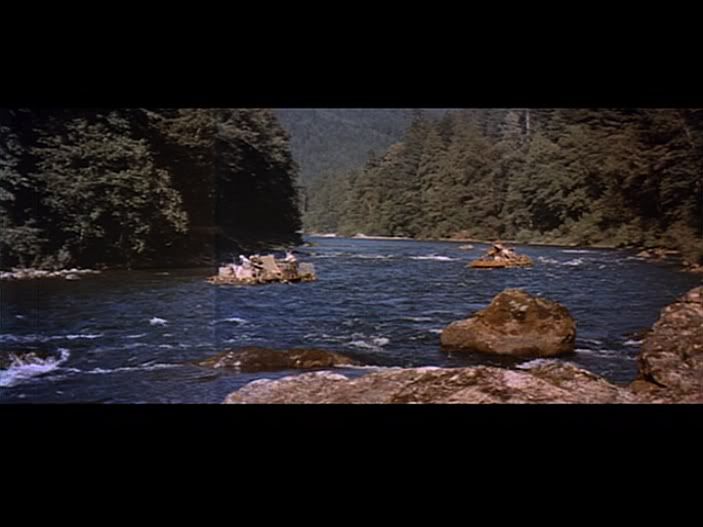
Pluto Region1 wrote:But now that I've seen these screen shots of "How the West was Won" I can see why they would want to use the super wide aspect ratio - those screen caps are just breath-taking! Thanks for posting those!
You're welcome! I'm glad someone's appreciating them!
Pluto Region1 wrote:so I gather what you are showing here is that the screen is curved and in order to show films in Cinerama they used 2 or 3 cameras broadcasting the same film at the same time but from different angles? If this is the case, one could see why this wasn't in use for long - as wouldn't this be a bit labor intensive?
If you ask Anders M Olsson (an infrequent UD'er), he can tell you a *lot* (and I mean a lot!) about Cinerama, as he's somewhat more an aficionado about it than I am. But yeah, the fact that it used 3 cameras/projectors was a hindrance to the system and led to both Todd-AO (by Mike Todd, who was one of the people behind Cinerama) and Ultra Panavision 70, which used a single shooting and projection system/lens.
In the 50th Anniversary DVD for
Oklahoma!, they've got some great caps and examples of Todd-AO in their featurette "CinemaScope vs. Todd-AO", as well as from the original short that aired before the Todd-AO version, "The Miracle of Todd-AO". There's also another short, "The March of Todd-AO", but I figured it'd be enough to just cover the first two.
Anyways on to the caps with some notes from the DVD and me... (warning to anyone with dial-up, this post has 19 large screencaps just ahead!)
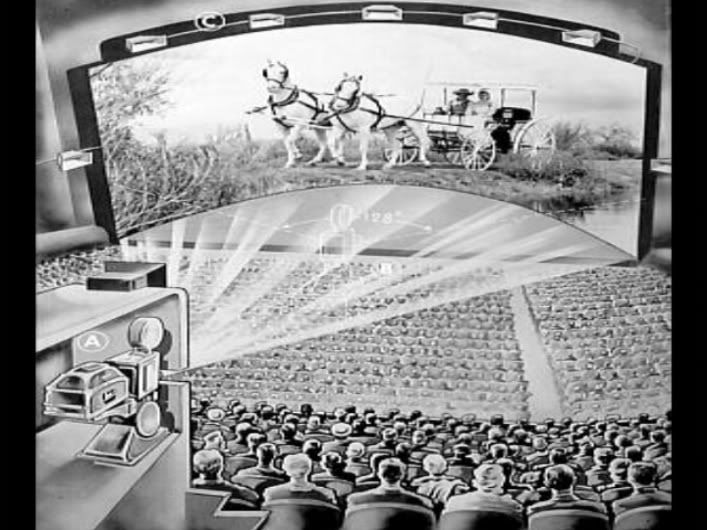
In these caps, we see a preliminary sketch of how
Oklahoma! would look when presented in the Todd-AO format, followed by two comparisons of projection systems for
Oklahoma in Cinerama and in Todd-AO (which was used). Both utilized a deeply curved screen, which gave a 128-degree field of vision, in an attempt to recreate a human's field of vision, which is about 160-degrees.


The next two caps are of filmstrips. The first compares the 70mm Todd-AO filmstrip (shot at 30 frames per second) to a 35mm CinemaScope filmstrip (shot at 24 frames per second). Due to greater amount of frames per second in Todd-AO, it resulted in a smoother and more flowing picture, without the "flicks" that were attributed to 35mm film.
In the CinemaScope filmstrip, the image is squeezed to fit a 35mm film, then with the use of an anamorphic lens, stretches it horizontally to fit the width of the screen. With the Todd-AO filmstrip, the image is shot "normally" onto 65mm film, then is transferred to 70mm (to add the 6-channel soundtrack), and is slightly curved, and that curve gets straightened when projected onto the 128-degree screen. Interesting to note, that at most, a CinemaScope projection could give a depth of only 50-degrees in a curved screen, and had only 3-channel soundtracks.


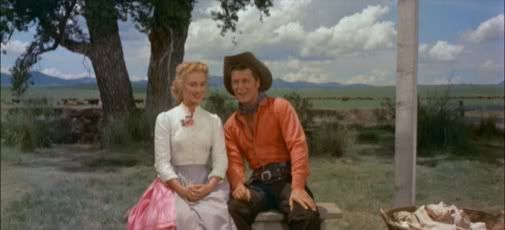
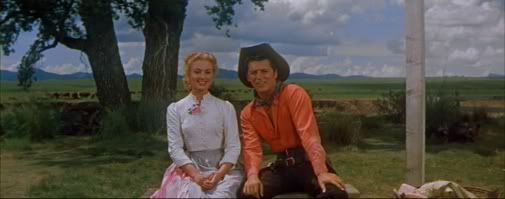
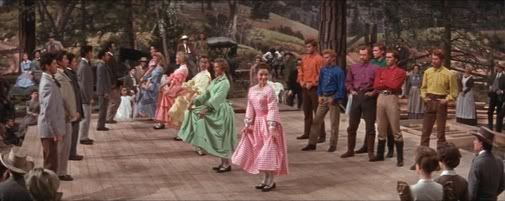
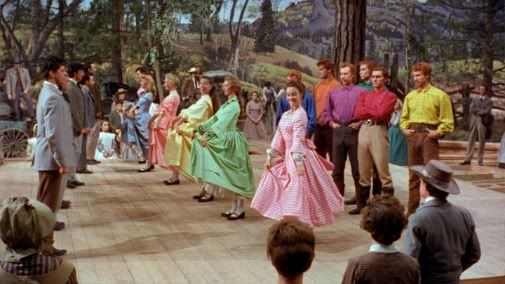
These two caps offer the same shot, though composed differently, first in CinemaScope, then again in Todd-AO (on the featurette, it's presented in its original curved form, while the DVD has it at a normal flat form). Also, a few more caps of the original curved picture of Todd-AO.


Finally, several caps from "The Miracle of Todd-AO", starting with a model of how a theatre equipped for Todd-AO looks. As opposed to CinemaScope, where one simply needed an anamorphic lens attachment for the regular projections, Todd-AO needed its own projector (because its spherical lens was not available simply as an attachment), a new 6-speaker system, and of course, the curved screen. One reason CinemaScope won over Todd-AO simply was the cost. Cheaper to make, cheaper to use, despite Todd-AO offering superior video and audio quality and a superior experience for the movie-going public. Anyway, after the model shot are a few caps of examples of Todd-AO and let me just say now, these caps don't do the video justice. They're much more impressive in motion, on a large widescreen television, with the home theatre system in full blast.


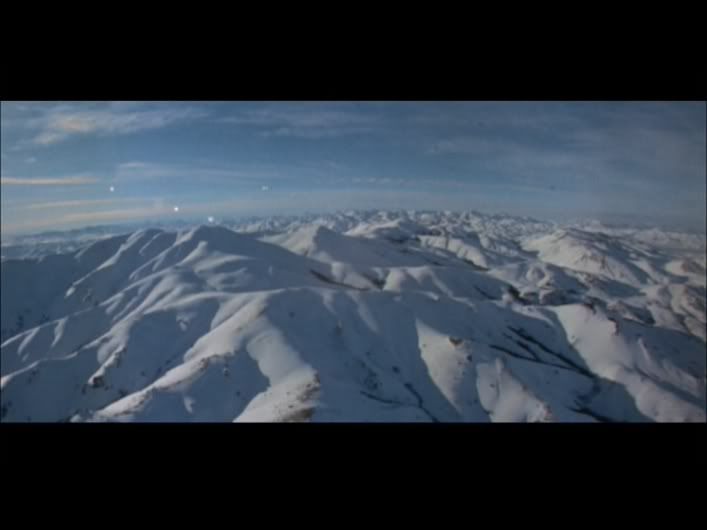


Escapay

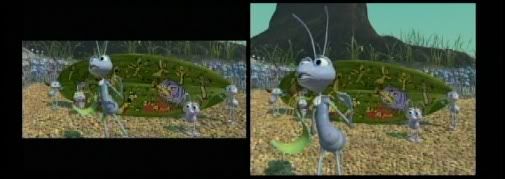
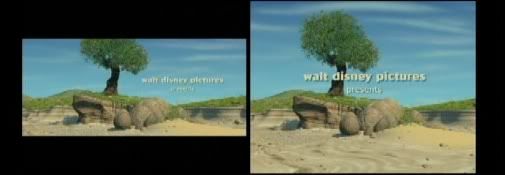

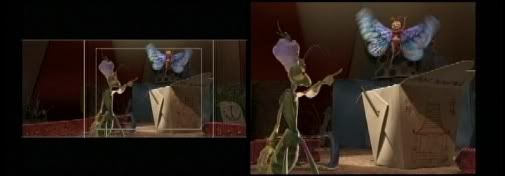

 That just became a whole lot easier to understand, in fact I never understood it in the first place, I just saw some random digits followed by the words Aspect Ratio...but now I actually get it
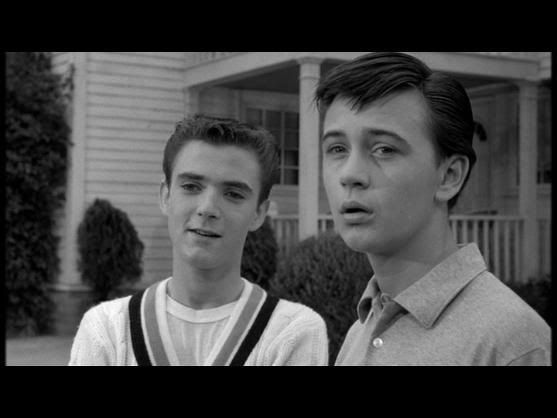
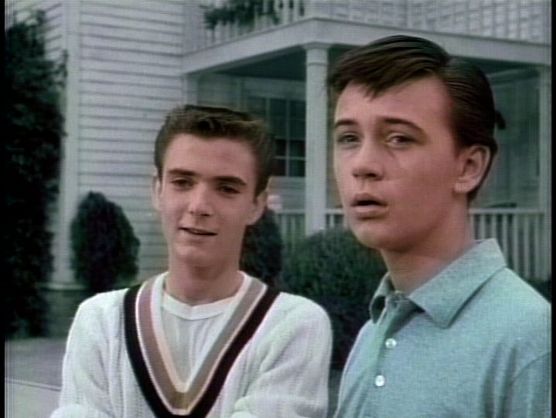
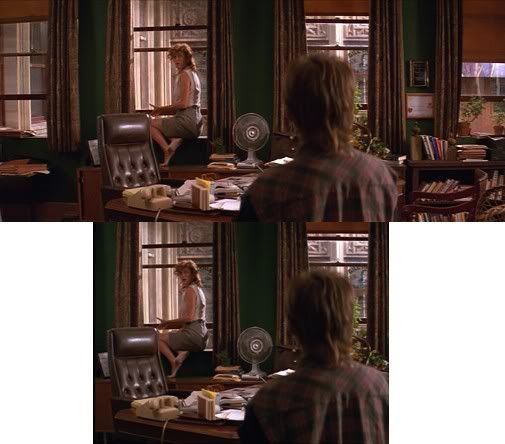










 Thanks!