Disney Releases Interview with Ron Clements & John Musker on "Princess & the Frog"
http://www.toonzone.net/news/articles/3 ... p-the-frog
Highlights from the Interview:
Q: I understand from John Lasseter that you guys were let go from the Studio.
JOHN MUSKER: We were banished, actually. [LAUGHTER] It was very fairy tale, yeah.
RON CLEMENTS: We had reached the end of our contracts—
JM: No, we were fired.
RC: Well, yeah, but it was the end of our contract. But we actually ended up being gone for only about six months, although at the time that we left, we didn’t really picture coming back.
JM: Disney had changed around us, somewhat, and the Disney we were leaving wasn’t the Disney we had been raised up by. It was heading in this direction we weren’t so crazy about.
Q: How did you feel when you got the telephone call to come back?
JM: It was hearing the news that we never anticipated. Pixar was estranged from Disney and we thought, ‘Well, they’ll probably make up somehow. It makes too much sense.’
RC: It just felt wrong.
JM: I hadn’t anticipated that they would put John Lasseter in charge here. And that was a whole new wrinkle, and suddenly, there was a possibility we could come back. And then when John called us and asked, ‘Hey, would you guys like to make another movie here?’—
RC: We were close to actually signing a deal to do a movie at another studio.
JM: John just said, ‘There’s all this stuff going on. I can’t talk to you in any great length, but just trust me. Don’t sign with somebody else.’ So we said to our lawyer, ‘We can’t do this. Don’t sign this piece of paper.’
RC: And a few weeks after that, the announcement was made, and we were very happy about that.
JM: And in terms of the character design—I drew the first sketch of the Prince way back when, and I did my drawings based on Cary Grant. But then, as Randy Haycock took it over and we really invented this country of Maldonia, we got pictures of handsome men from many cultures around the world, and we brought women in to look at these pictures. And we asked them to flag the ones they found most handsome. And we even did that with the English-language voice of the Prince, Bruno Campos. We had a taste test. We had three finalists for the Prince’s voice, and we didn’t say who they were, just A, B and C. And we brought some women in and asked them, ‘Which voice engaged you most?’ We wanted him to be both funny and a leading man, and dare I say it, sexy? Attractive. And the women chose Bruno. They all responded to him so much.
RC: And with Tiana, there were boards with pictures of African-American women, and we used them to evolve her design.
JM: We had a character design retreat. We actually went to Ojai, which is a city not far from here, very pretty city, with all the supervising animators, Mark Henn and Bruce Smith and all. We all got together and we put all the drawings of the characters together and different animators would take a drawing. Bruce might take a drawing of Tiana that Mark had done, and he would do some refinement. So there was a lot of cross-pollination, to try and fit the animator with the character, to find the artist that produced the appeal, the dimensionality that we were going for. It was not an instant process.
RC: John actually did the original designs of all the characters, which I still remember. For our original pitch of the movie to John Lasseter in March of 2006, we had drawings of all the characters that John had done, along with photographs of settings from New Orleans.
JM: Certainly, the actors affect the design. Anika Noni Rose, the English-language Tiana, she has these dimples that Mark Henn included. Keith David has this split in his teeth that Bruce Smith gave to Dr. Facilier, our villain. And I think Naveen was pretty much designed before we got Bruno, so that design didn’t change too much with Bruno, they’re both really handsome.
JM: Randy Haycock did an early exercise, and he animated Prince Naveen saying a line from Johnny Depp in Don Juan de Marco—“I give women pleasure,” or something like that. And he did it very saucy, coming from this dreamboat, handsome guy. And then he did the same animation with Naveen as a frog, and tried to keep the same come-hither look on his face and the same attitude
JM: The first drawing I did of Ray, I drew him like [the musician] Dr. John. I gave him a little beret and a mustache and all these things. And that went away.
JM: Bill Schwab, a visual development artist who was a character designer, he took the drawings of Ray that had been done and he really refined them, so the design that you see is really a combination of Bill Schwab and Mike Surrey, who ultimately designed the character.
Q: Do you know what’s next?
JM: No, we had a few ideas that we pitched to John a while ago that we’re going to look back at, but we haven’t zeroed in on one yet.



 , but then when he became the star,
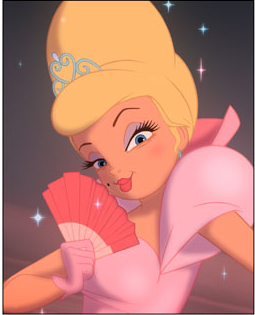
  . It was a great way to end his character. Charlotte was hilarious, as I've heard, and Facilier was dark and imposing. His friends on the other side were dark too, in fact, maybe a little too intense for young eyes?
  The animation was just superb. Where has Disney been all these years? Overall, I'm giving it a 9.5/10. A wonderful film.