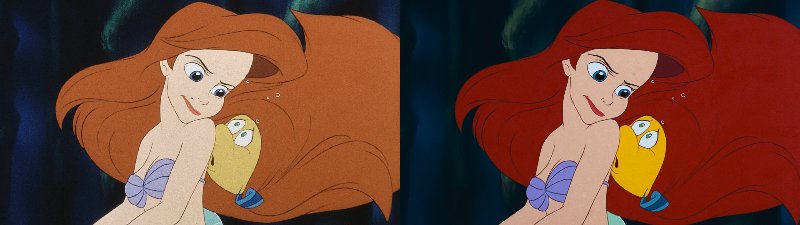
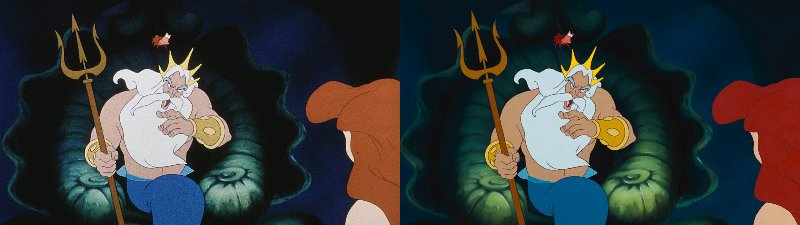
Cel paint used by Disney
Posted: Mon Jan 13, 2020 2:35 am
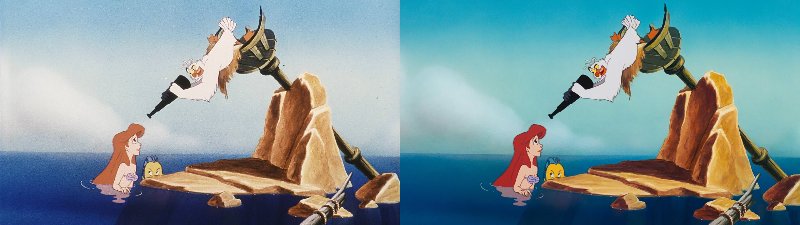
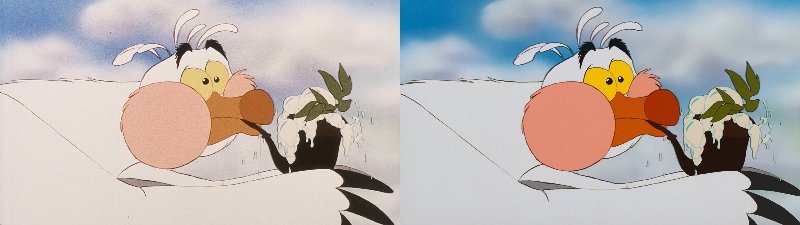
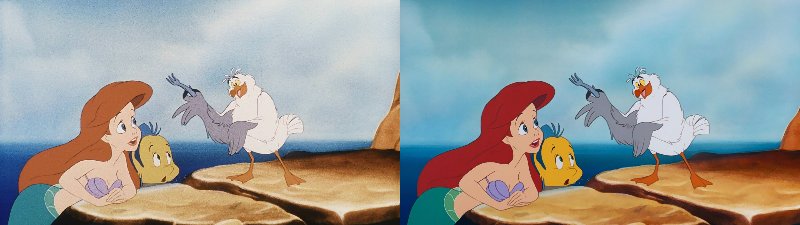
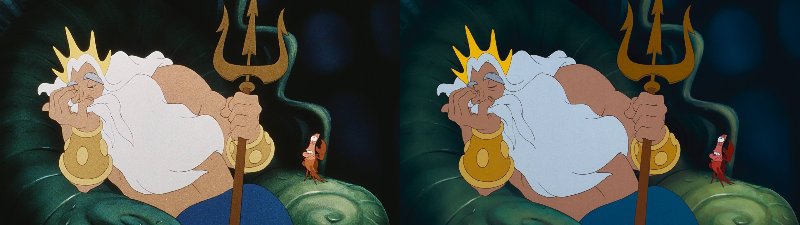
Anyone who have noticed any differences in colors between Oliver & Company and The Little Mermaid on one hand, and all other cel animated features from Disney? Or perhaps the digital restorations have erased potential differences.
Found this info on the net:
https://rockinmama.net/the-ink-and-pain ... n-studios/
http://resources.conservation-us.org/pm ... gallo.html
It's clearly a reason why the 80s has been called the transition era in Disney animation. As pointed it in a previous post I think; The Fox and the Hound was the first feature made by a new generation of animators. The Black Cauldron and all later features use CGI to various degrees (including The Prince and the Pauper, the only featurette to combine cels and CGI), and experimented with the APT-process. A new sound library replaced the old one. And again; acrylic paint replaced the gouache paint. The Little Mermaid was shot on color negative (the other features used the Successive Exposure method, which was essential the same as the Technicolor process except it was specialized for animation).
Then CAPS came and cel animation was history.
Found this info on the net:
https://rockinmama.net/the-ink-and-pain ... n-studios/
And from a 1995 article:At one time, all paints were custom-made at the studio lab, but the gum-based resin paint used took up to 8 hours to dry. A fast-drying paint was used for the first time in the production of Oliver & Company.
http://resources.conservation-us.org/pm ... gallo.html
(I assume also the use of cel animation in Disney Television ceased a long time ago)On July 31st, 1939 EMILIO BIANCHI started his career at Disney as a Chemist in the Paint Lab. Emilio began by mixing gouache paints and in time became the Paint Lab Supervisor until he retired in 1978.
The recipe for “BAMBI” “1942” is considerably drier and applied thinner than the paint which was used for “PETER PAN” “1953”. A significant change in paint chemistry occurs between the productions of “CINDERELLA” “1950” and “ALICE IN WONDERLAND” “1951”. This paint is moist and applied with a heavier coat. The steady use of this recipe continues until “THE GREAT MOUSE DETECTIVE” “1986”. “OLIVER AND COMPANY” “1988” marks the first time “Cel Vinyl” paints were made at the studio but soon its manufacture was abandoned for paints bought from local vendors. “Cel Vinyl” paints were used to create “cel” art for the productions of “WHO'S AFRAID OF ROGER RABBIT?” “1988” “whose “cel” art was made in England” and for “THE LITTLE MERMAID” “1989”. A proprietary computer generated coloring system was developed for translating animation pencil drawings into color and was used for “THE RESCUERS DOWN UNDER” “1990”. Its use has continued with each subsequent animated feature film the studio has released. The making of “cels” as production art has been discontinued with the exception of Disney Television which still employs the traditional use of xerographic line transfer and cel vinyl paints on registered tri-acetate sheets.
It's clearly a reason why the 80s has been called the transition era in Disney animation. As pointed it in a previous post I think; The Fox and the Hound was the first feature made by a new generation of animators. The Black Cauldron and all later features use CGI to various degrees (including The Prince and the Pauper, the only featurette to combine cels and CGI), and experimented with the APT-process. A new sound library replaced the old one. And again; acrylic paint replaced the gouache paint. The Little Mermaid was shot on color negative (the other features used the Successive Exposure method, which was essential the same as the Technicolor process except it was specialized for animation).
Then CAPS came and cel animation was history.